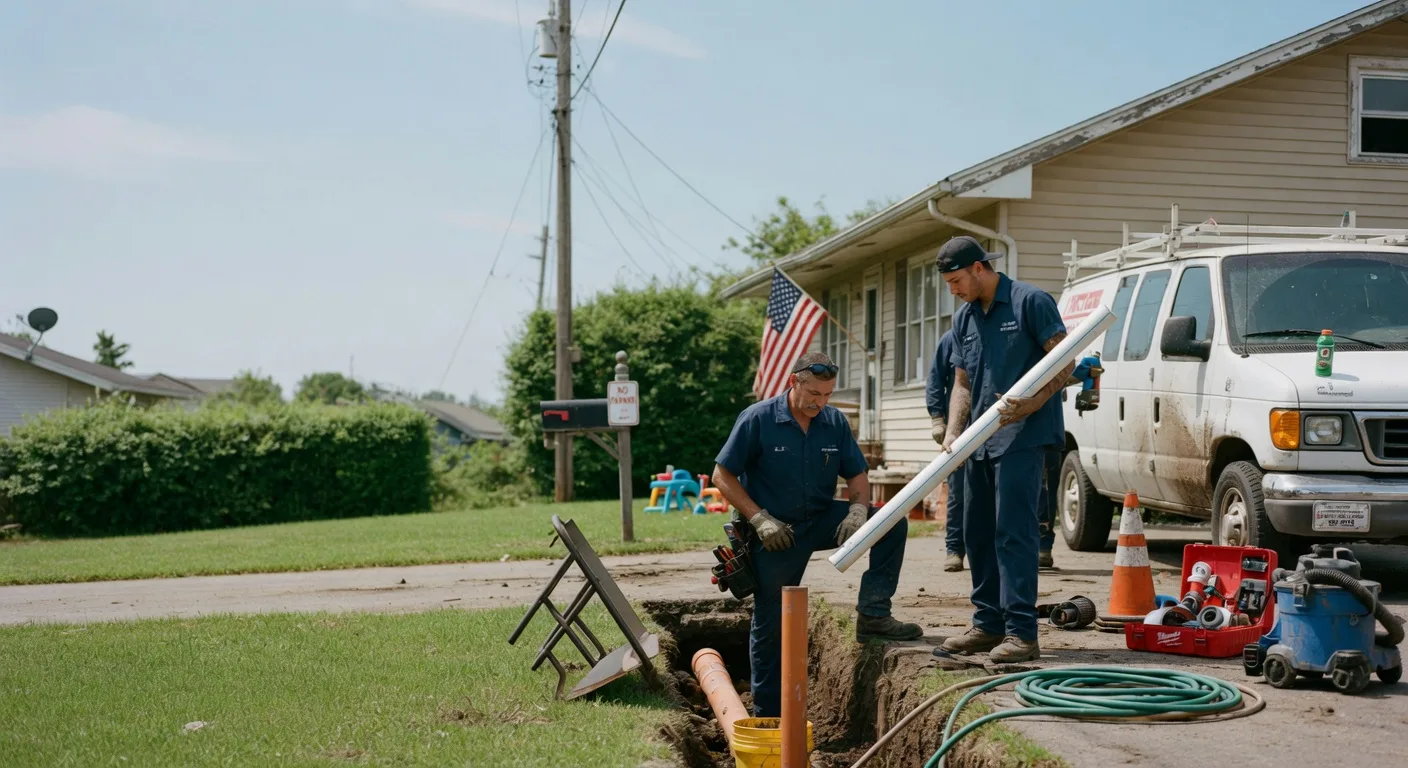
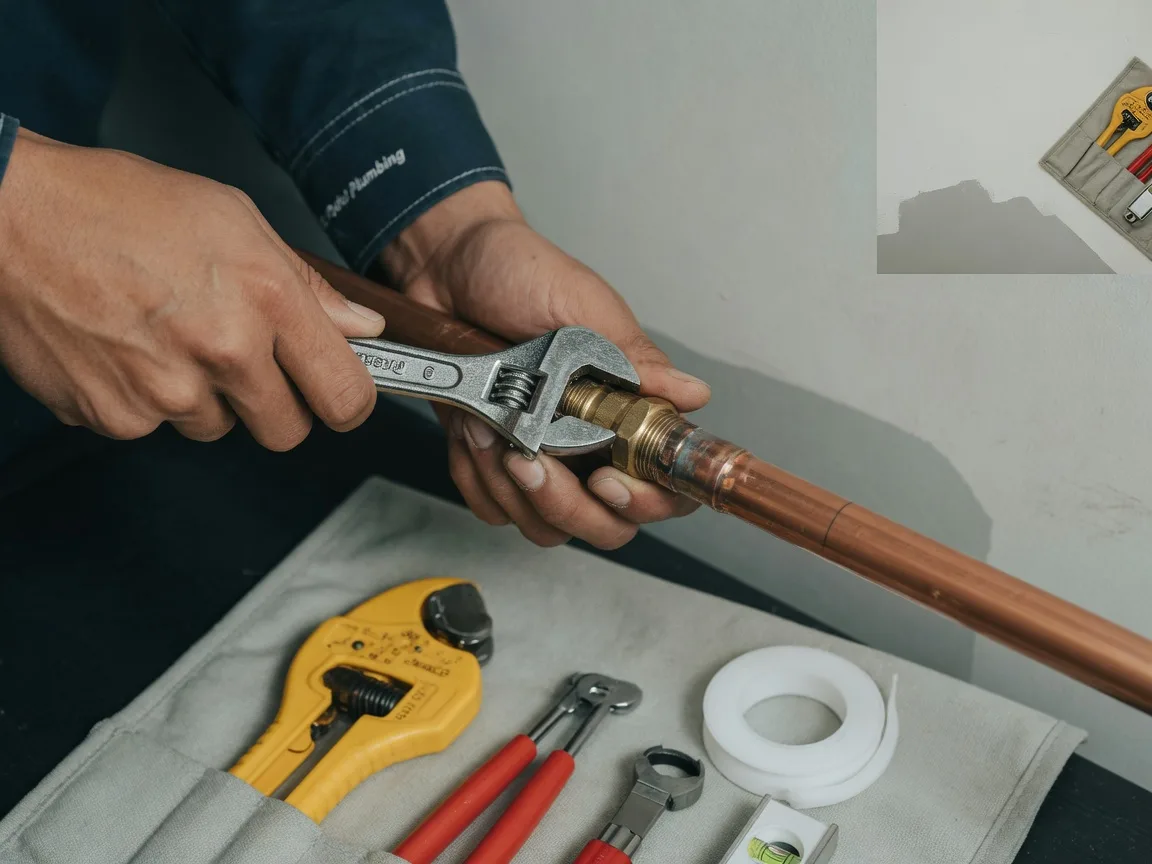
Why is one drain slow when the rest of the house is fine?
A single slow drain, like a bathroom sink or shower, almost always means a local clog close to that fixture. In a bathroom it is usually hair and soap scum matted just past the opening. In a kitchen it is grease that has cooled and hardened on the pipe wall, with food particles caught in it. The blockage sits in that fixture's own branch line, so nothing else in the house feels it. This is a cable machine job, because the cable punches a channel through the clog and restores flow. A safe homeowner check is to pull visible hair from the drain opening, or to clear the P-trap under a sink. If every drain in the house is slow or backing up together, the blockage is downstream in the main line, and that is a different job with different equipment. Root intrusion at a clay joint, a bellied section holding water, scale narrowing old cast iron, or a partly collapsed pipe can all cause it. If water rises in a tub when you flush the toilet, or a floor drain bubbles when the washer runs, stop running water and call. A plumber in Olive, MT can tell which situation you have from a few questions.
Watch how the slow drain behaves over a few days, because the pattern tells you whether it is getting worse. A sink that drains a little slower each week is usually a clog that is still growing, and it is cheaper and easier to deal with early than after it stops completely. A drain that clears and then slows again within a day or two suggests buildup on the pipe wall rather than a single plug. A common mistake is pouring boiling water down a drain that has a plastic trap or plastic pipe, which can soften joints and loosen them. Another is pushing the clog further down with a stiff wire hanger, which can scratch the pipe or wedge debris deeper. If the slow fixture is the one closest to the main line, such as a ground floor tub, treat it more seriously, since it can be the first sign of trouble in the main.
Can a drain under a concrete slab be cleared without breaking the floor?
Usually, yes. Clearing a blockage and repairing a broken pipe are two different jobs, and only the second one needs the floor opened.
In a slab-on-grade house the drain lines run inside or beneath the concrete. There is no crawlspace to inspect, so symptoms are the only evidence you have. A cable or a hydro jetter still reaches the line through a cleanout or through a pulled toilet. Grease build-up on the pipe wall, roots in a joint and scale in cast iron can all be cleared that way.
What does need the floor opened is a cracked, collapsed or bellied section under the slab. A bellied line holds water and collects waste however often it is cleared. In older housing stock where clay or cast iron was the standard, failed sections are more likely.
A camera inspection with a locator pinpoints the fault. The plumber finds the exact spot and marks it on the floor before anything is cut, which keeps the opening small. What the job involves is driven by access, the materials, how much concrete must be opened and removed, and any permit or code requirement. Opening a slab often brings one in.
Safe homeowner check: note whether one fixture is slow or every drain is affected. A single slow fixture is usually a cable job on a branch line. Every drain backing up points to the main line or the sewer lateral.
Stop running water and call now if the whole house is backing up. Report water staining or a warm, damp patch on the floor, because it can mean a leak under the slab.
Expert Plumbers Co is a referral service. We refer homeowners in Olive, MT to an independent local plumber. Call (380) 262-9173.
A spot repair under a slab is more disruption than most people picture. The plumber breaks out a section of concrete, digs down to the pipe, replaces the damaged length, and the floor is patched. Dust, noise and a few days without some fixtures are normal. Furniture and flooring over the area must be moved first, and tile or a finished floor may not match after patching.
For longer runs of damage, some plumbers can line the pipe from inside, or route a new line overhead or outside the house, which avoids cutting the slab. Whether either suits your pipe depends on its condition and on local code.
Ask to see the camera footage and the locator mark on the floor before any cutting begins. Mention in-floor heating, radiant tubing or a post-tension slab if you have one. Cutting into those without knowing is dangerous, so the plumber needs to hear about them before a saw comes out.
What actually happens when a plumber comes to clear my drain, from the moment he arrives to the last flush?
Most people only see the machine come out of the truck. There is more to the visit than that, and knowing the order helps you tell a careful job from a rushed one.
An independent plumber usually starts with questions. Which fixtures are slow, which are fine, when it started, and whether you have noticed gurgling or a smell. One slow sink points to a branch line. Every drain in the house acting up points to the main line.
Next comes a look at access. That might be a sink trap, a tub drain, a toilet that has to be pulled, or a cleanout outside or in the basement. Floors and cabinets get covered with towels or a drop cloth.
Then the plumber picks the tool. A hand auger or small drum machine suits a sink or shower. A larger cable machine suits a main line. If grease or heavy scale is suspected, hydro jetting may come up instead, and a camera may be suggested before anything else.
The cable goes in and is fed forward by feel. A clog gives resistance, then a change when the cutting head breaks through. Roots, grease and soft paper each feel different, and a careful plumber will tell you what the cable seemed to hit. When the cable comes back out, whatever clings to it is worth a look. Hair, wipe fibers, root hairs or a greasy paste all point to a cause.
After that comes the test flush. Water runs through the fixture, and often through several fixtures at once, while the plumber watches for slow movement, gurgling, or water rising in a neighboring drain. At a cleanout, the plumber watches the flow pass. This step matters most. A line that drains well for ten seconds and then slows is only partly open.
Last, the plumber explains what was found. If the blockage was in the main line, has come back before, or the cable stopped at the same spot each time, a camera inspection is the sensible next step, because a cleared pipe and a healthy pipe are not the same thing.
Cost depends on access, how far the cable has to travel, whether a toilet has to be pulled, and whether extra equipment is needed.
If you need a drain cleared in Olive, MT, Expert Plumbers Co can connect you with an independent local plumber at (380) 262-9173.
I rent out my place and the tenant says the drains are backing up. What should I ask them, and what should I arrange?
Start with a few plain questions, because the answers tell the plumber where the problem is before anyone arrives.
Ask the tenant which fixtures are affected. One slow sink or tub points to a clog in that fixture's own branch. If several drains are slow, or water rises in a tub or shower when the toilet is flushed or the washer empties, the main line is the likely culprit.
Ask when it started and what changed. Did it follow heavy rain, a laundry day, a large gathering, or a new habit such as flushing wipes? Ask whether there are gurgling sounds, a sewage smell, or water in a floor drain or basement. Ask whether anything has already been tried, especially chemical cleaners, since those are a hazard to whoever opens the pipe next.
Ask for photos or a short video of the fixtures. That is faster than a long phone call and helps if you are not living nearby.
What to tell the tenant right away: stop running the washer and dishwasher, go easy on the toilets, and do not pour cleaner down the drain. If sewage is coming up inside the home, or water is spreading across a floor, treat it as urgent and keep people and pets out of the wet area.
What to arrange: a plumber to clear the line and, if the same drain has failed before, a camera look at it. Offer the plumber the tenant's contact details and agreed times so access is not the delay. Ask whether the blockage was in the fixture branch or the main line, and whether the plumber thinks it was caused by tree roots, a sagging pipe or something that was flushed. That tells you whether it is a one-off or a repair item.
Keep notes: dates, photos, what the plumber found. Whether the cause is wear or misuse affects the conversation with the tenant, so write down what was seen rather than what was assumed. Check your lease and local rules for your own obligations.
Expert Plumbers Co can connect you with an independent plumber in Olive, MT for this: call (380) 262-9173.
Our drains only back up in the morning when everyone is showering. Why only then?
Everything is fine all day, then at seven in the morning the shower pan fills up and the toilet gurgles. This is the classic sign of a partial blockage in the main drain.
A line with a partial clog still carries a normal trickle. One person washing their hands never notices. But when two showers, a washer and a toilet all run at once, more water arrives than the narrowed pipe can pass, and the extra has nowhere to go but up the lowest opening in the house. Once the rush ends, the pipe catches up and the problem seems to vanish.
The usual causes are a root mat growing through a clay joint, a bellied section of pipe that holds a pool of water and debris, grease build-up on the pipe wall, or scale narrowing an old cast iron line.
The key question is how many fixtures are affected. One slow fixture, such as a single shower, usually points to a clog in that fixture's own trap or branch line. When the tub, floor drain and toilets all struggle at the same time, the problem sits in the shared main, and it will keep returning at peak load until it is cleared properly.
Safe homeowner check: stagger your mornings for a day. Run one shower, then wait, and watch whether the lowest drain in the house, often a basement floor drain or a ground-floor tub, stays calm. Note which fixtures react first and write down the times. That list is useful to the plumber.
Stop running water and call now if sewage is coming up in a tub or floor drain, if a drain is overflowing onto the floor, or if you smell sewage inside the house. Do not keep using showers and the washer while the line is backed up.
A cable machine is often enough for a soft blockage such as a small grease or paper clog. If roots, a belly or heavy build-up is suspected, the job usually needs a camera inspection to see the pipe, and hydro jetting to clean the pipe wall rather than just poke a hole through the clog.
Expert Plumbers Co is a referral service. We connect you with an independent local plumber in Olive, MT. Call (380) 262-9173.
When you speak to the plumber, mention that the backups only happen at peak use. Ask whether a camera inspection is included before any jetting, and ask what they found on the pipe, not just that it was cleared. Scope and cost depend on access to the line, whether a cleanout exists, how much has to be opened up if a section is damaged, and any permit or code requirement for repairs.